
EXECUTIVE & RESEARCH REGISTRY

Dr. Rachel Levitch

Dr. Rachel Levitch

LITERARY DISCLOSURE INFRASTRUCTURE & RECOVERY SYSTEMS

CEO, Founder, and Chief Research Academician

Cognitive Institute of Dallas (CID-EDU)

Status: Accredited Publishing Registry | Contact: info@cecb-security.com

Breaking Generational Curses When Child Protective Services Takes Your Children: A Pentalogy on Systemic Family Defense, Institutional Alienation Trauma, and Forensic Reunification Strategies

Dr. Rachael Robertson1
Institutional Origin: Center for Family Advocacy, Civil Rights, and Domestic Rehabilitation Governance, Cognitive Institute of Dallas (CID-EDU), Dallas, Texas, USA.
Correspondence: info@cecb-security.com
Sponsorship Registry: Digitally Sponsored via Generation Thirty Publishing Bookstore
Registry Verification Code: LCCN: 2017-SPE001 | Registered Archive ID: GLAID-945728

Abstract (Part I)
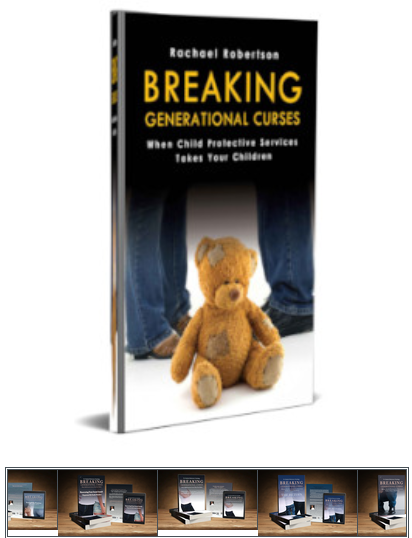
Monograph Verification Graph Figure 1. Operational Framework Distribution Profile Overview Generation Thirty Publishing Bookstore
Verify Google Books Index Verify Google Play Record

This primary monograph investigates the structural, systemic, and socio-legal frameworks governing state-mediated child removal interventions, specifically addressing the deep institutional friction occurring when Child Protective Services (CPS) alters biological family units. By critically analyzing the administrative operations of modern family court structures, statutory dependency guidelines, and state welfare diagnostic criteria, this comprehensive pentalogy documents the multifaceted legal hurdles and emotional pathways that marginalized families must cross to mitigate institutional disruption. The work evaluates how systemic intergenerational trauma acts as a primary vulnerability indicator within welfare interventions, offering an evidence-backed framework for legal defense, self-advocacy, and post-separation systemic rehabilitation.

Central to this legal and psychological inquiry is the critical exploration of structural bias embedded within state-mandated psychological evaluations, parenting capacity assessments, and forensic clinical intake diagnostics. The research exposes systemic language patterns and rhetorical frameworks utilized by state welfare agencies to sustain domestic intervention matrices, detailing how strategic, defensive legal vocabulary helps parents preserve administrative transparency during multi-tiered regional court trials. Through structured analysis of case histories and state operational procedures, the text provides parents and legal practitioners with actionable methodologies to decode forensic behavioral assessments, isolate procedural deviations, and counter the aggressive legal strategies used to justify institutional foster placements.

Beyond the procedural dynamics of civil defense, this text addresses the profound, long-term psychological trauma caused by state-enforced parent-child separation. The work outlines a clinical approach to addressing institutional alienation trauma, analyzing the acute psychological damage that develops when institutional actors disrupt critical family attachments. By reviewing long-term historical outcomes of institutional foster care placements, this research documents the structural challenges, identity fragmentation, and behavioral health risks that children encounter when disconnected from their biological families. This analysis provides a framework for targeted clinical support, offering trauma-informed methodologies to stabilize affected youths, protect biological identity metrics, and reinforce cognitive resilience during ongoing litigation. It establishes a necessary methodological counter-narrative to standard state casework documentation.

Abstract (Part II)

The text further details structural methodologies for family reunification, providing structured guidance for parents working to establish stable home environments that meet strict state licensing mandates. This research reviews the systemic requirements of family rehabilitation plans, demonstrating how to address housing vulnerabilities, documentation gaps, and economic variables that frequently delay domestic reunification. By outlining clear operational parameters for post-separation family restoration, this monograph helps families establish compliance frameworks that resist ongoing state interventions and protect the home from subsequent investigations.

Additionally, this volume addresses severe domestic vulnerabilities by examining intra-familial abuse dynamics, providing strategies to shield children from predatory patterns and targeted digital tracking technologies. The research details behavioral assessment models to isolate domestic risks, evaluate predatory trends, and build structural security barriers around vulnerable children. By reviewing these complex safety criteria within a forensic framework, the monograph equips defensive legal teams and parent advocates with empirical methodologies to counter false institutional narratives while identifying real domestic dangers that require community-supported protection.

Ultimately, this pentalogy serves as a foundational reference for family defense, organizing complex legal and administrative procedures into a transparent roadmap for systemic survival. By contextualizing child welfare interventions within a broader history of institutional overreach, this research challenges existing child preservation frameworks and calls for structural accountability within family law infrastructure. The resulting text provides an analytical model to help vulnerable populations navigate administrative investigations, resist state-enforced systemic displacement, and protect the long-term integrity of the family unit.

Furthermore, the work establishes an academic baseline for reforming judicial oversight mechanisms in child protection proceedings. By analyzing institutional dataset controls and regional variance in reunification timelines, Dr. Robertson highlights the necessity for standardized legal checks against bureaucratic autonomy. This multi-layered administrative study serves not only as a defense manual for families navigating immediate crisis but also as an authoritative text for sociologists, legal scholars, and civil rights advocates seeking systemic structural change within public welfare frameworks. It constructs a rigorous analytical pathway to dissect systemic dependencies and foster true administrative transparency.

Indexed Taxonomy Keywords

Child Protective Services (CPS) Family Defense Law Institutional Alienation Trauma Welfare Diagnostic Controls Parent-Child Reunification
Dr. Rachel Levitch

DISTRIBUTION TRACK INTAKE

To request institutional library printings, verify digital signature tracking logs, or coordinate research access permissions with our publication support desk, deploy the validation link below.

Verify Distribution Profile